
Common Mergansers

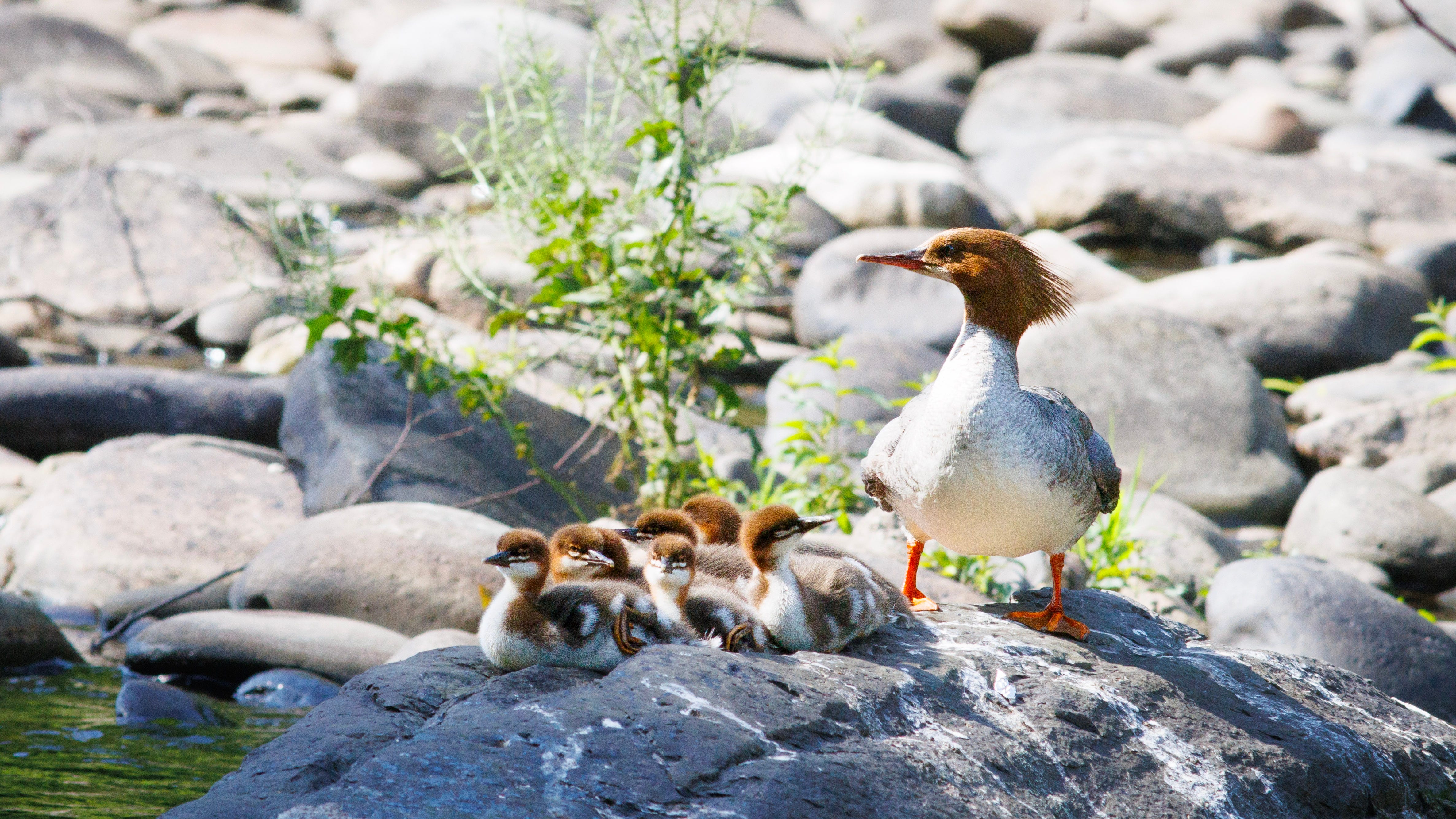
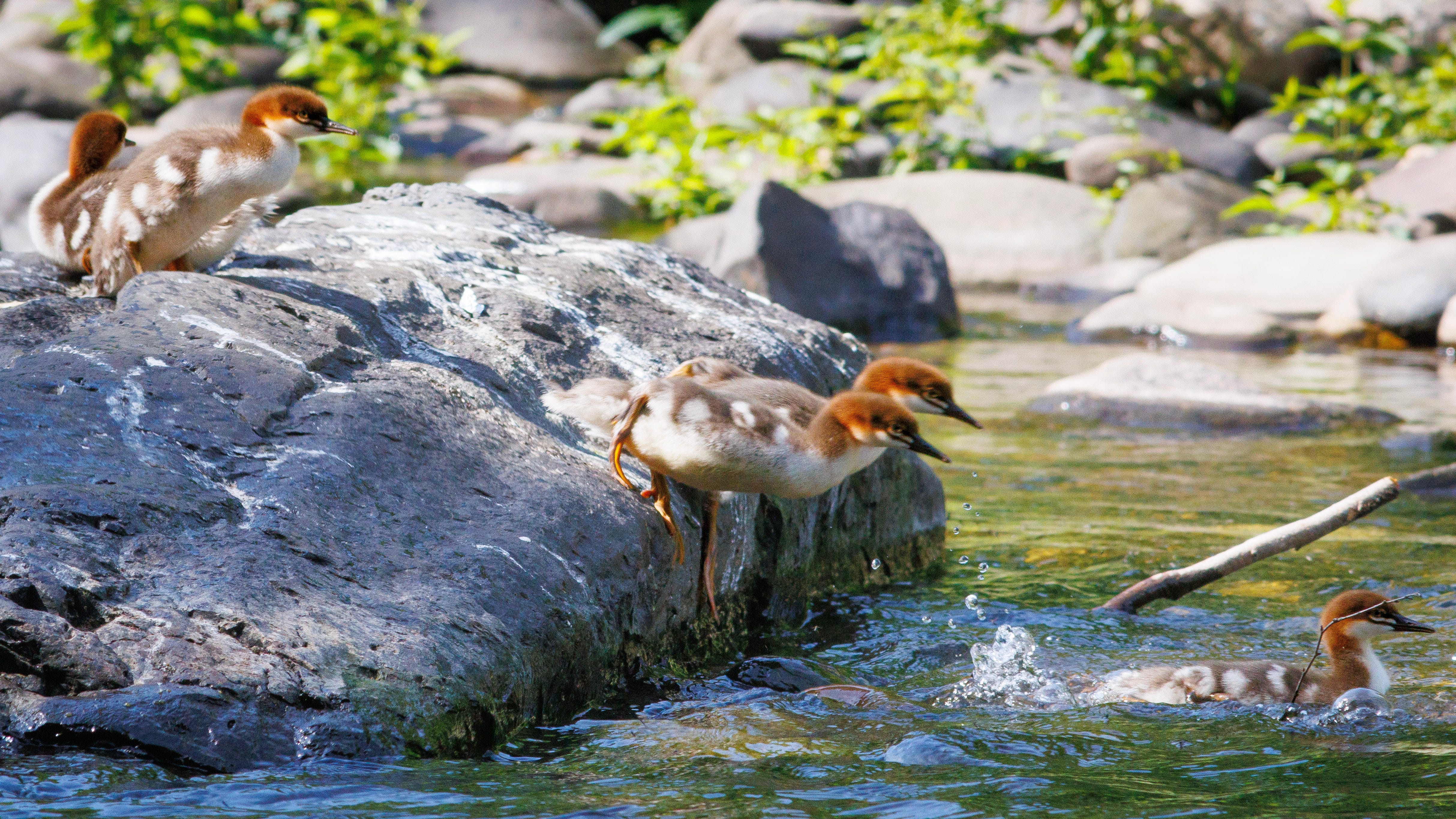
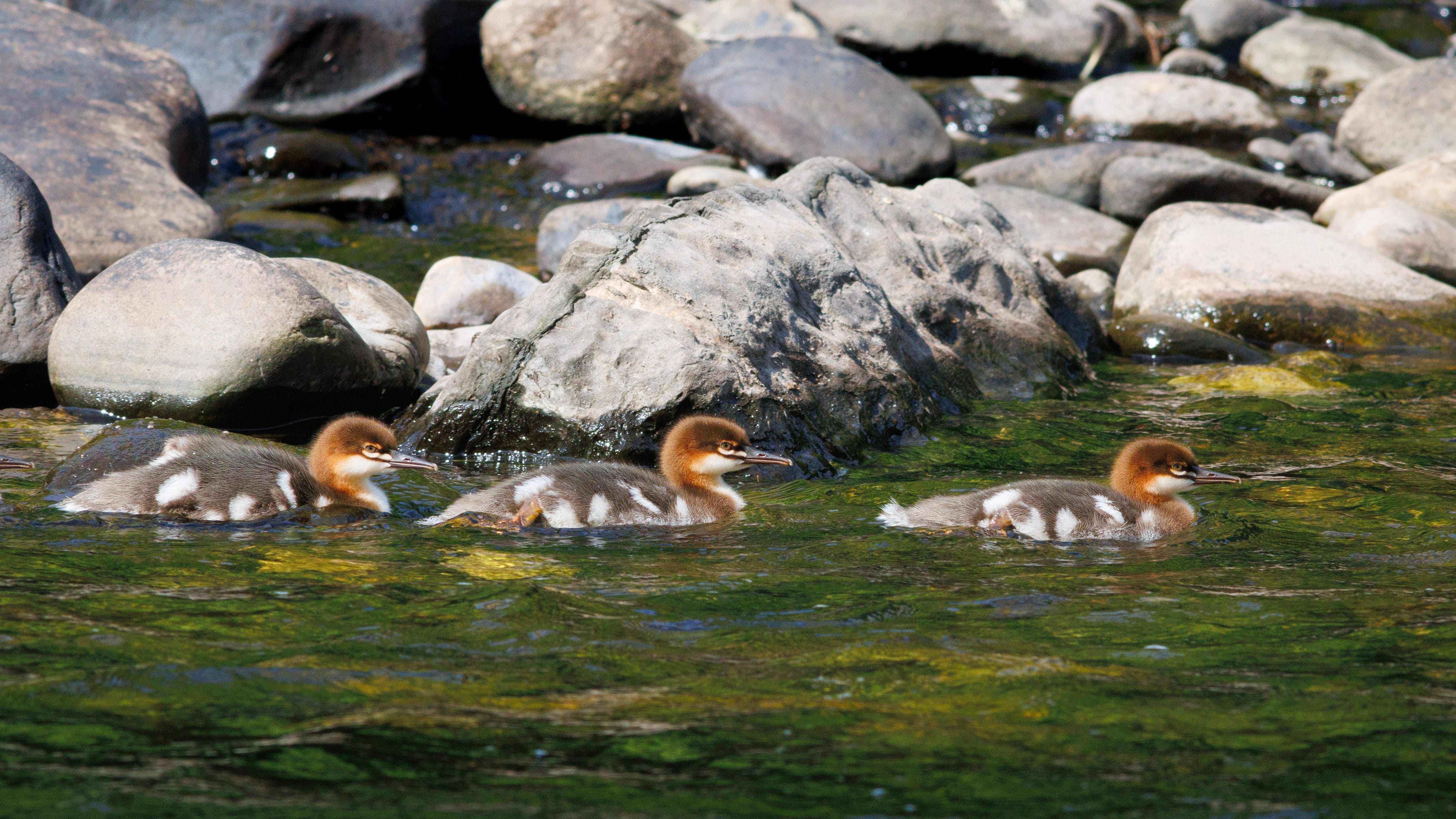
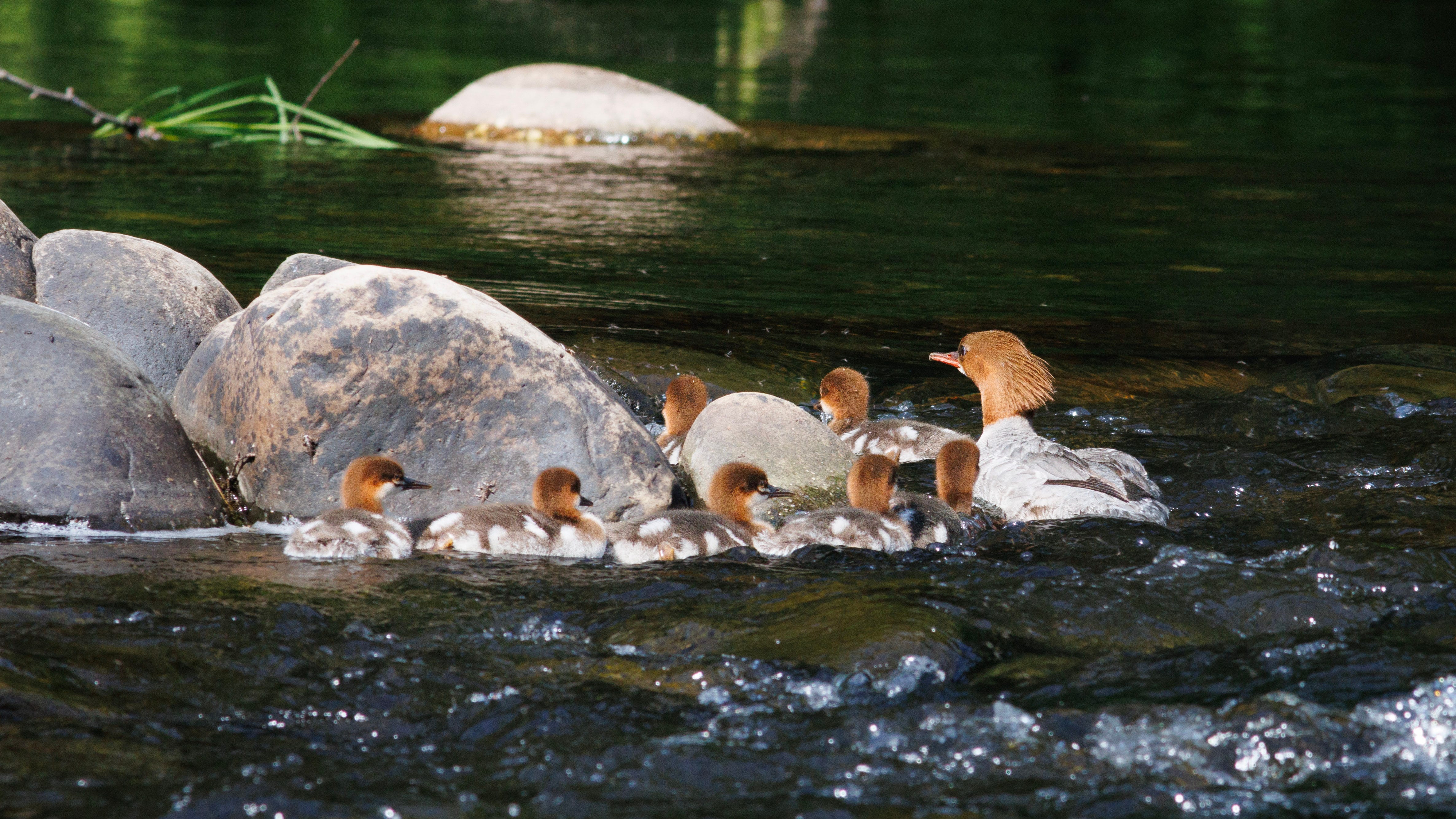
A couple of weeks ago, I was fishing on the Neversink river, when I observed a female Common Merganser and a group of ducklings. This bird had 8 young with her, and they were just chilling out on a rock in the middle of the river. I really enjoyed watching them navigate the fast moving water with ease, and cruising behind their mother. Needless to say, it was a pretty special moment. Below I will add some more information on these birds, describing how they take care of their young.
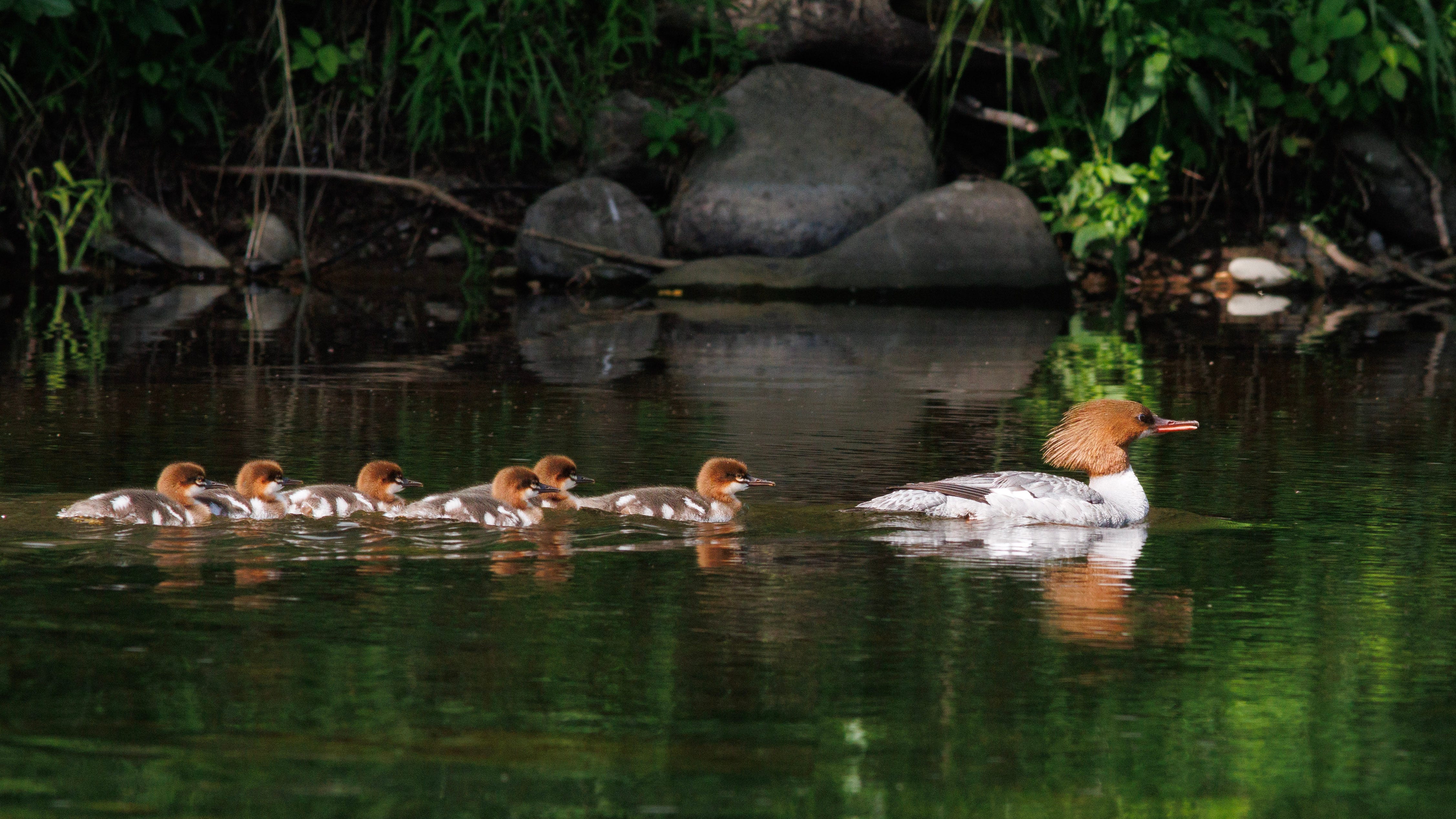
Adult male mergansers play absolutely no role in nesting or rearing the chicks. As soon as the female begins incubating the eggs in the spring, the males abandon the nest site to form their own separate, leisurely male flocks for the summer.
Common Mergansers will often group up and take care of their young together in a fascinating cooperative behavior known as “crèching.” Seeing a single female leading dozens of ducklings is actually a regular occurrence for this species. As different merganser families move down rivers into larger lakes, multiple broods frequently meet and mix together. Adult females often team up to defend this large combined flock. Ducklings that get separated from their biological mothers in fast-moving rivers will instinctively imprint on and follow any passing adult female Common Merganser.
Common Merganser chicks are precocial, meaning they are born ready to move. Within 24 to 48 hours of hatching, the flightless chicks will leap out of their tree cavities to the ground. Once they reach the water, they feed themselves completely. The mother does not catch food for them; her role is strictly to guide them to rich foraging grounds and defend them from predators like hawks, eagles, and large fish. The babies start by diving along the surface for aquatic insects. By the time they are roughly 12 days old, they transition into expert divers and begin hunting small fish using their specialized serrated bills.
Thank you for the facts with the photo stories alongside. I had to look up where the Neversink River is (great name btw). That's high up there! I'm a bit lower in the east coast myself.
I really hope this series continues. I love to learn about all kinds of birds. I actually just learned the term "precocial" this week because I was looking up baby gallinule chicks, trying to gauge the age of the ones I saw. They were such cuuuute little balls of fluff! 💖
Amazing facts, amazing pics!