
American Woodcock

I’ve always been fascinated by the American Woodcock. It is such a unique bird. With those enormous eyes and that awesome bill, they remind me of a camouflaged football with wings.
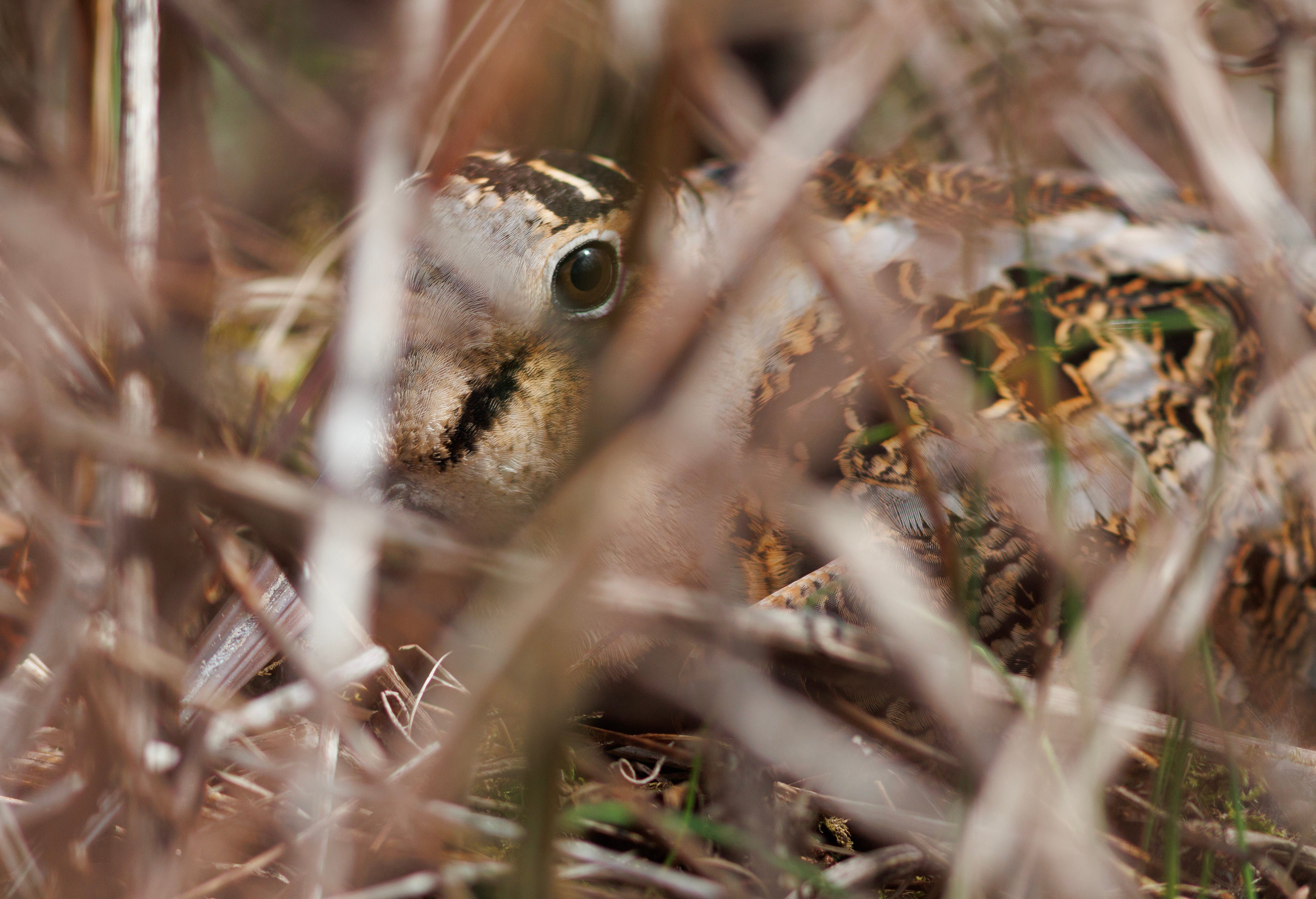
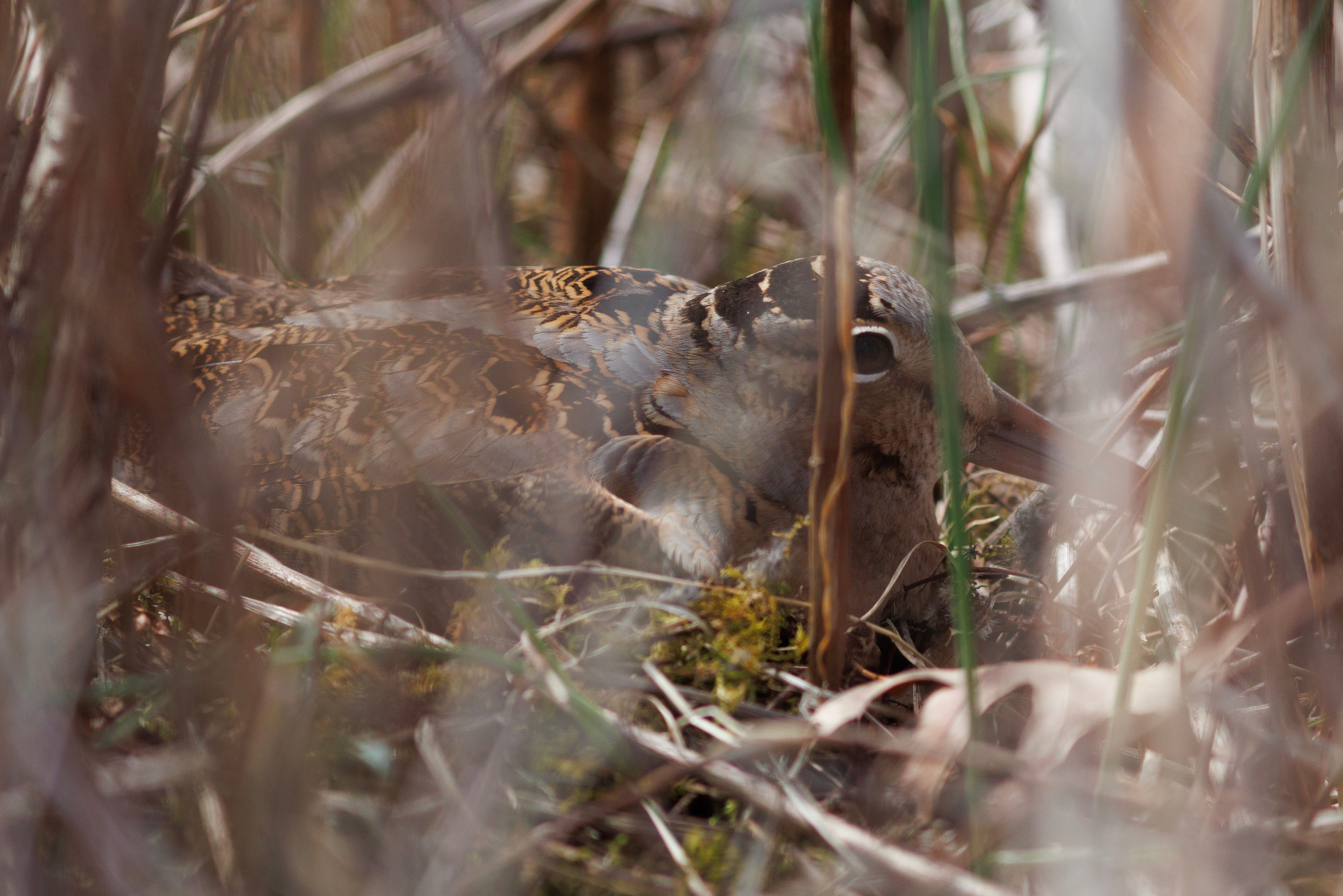
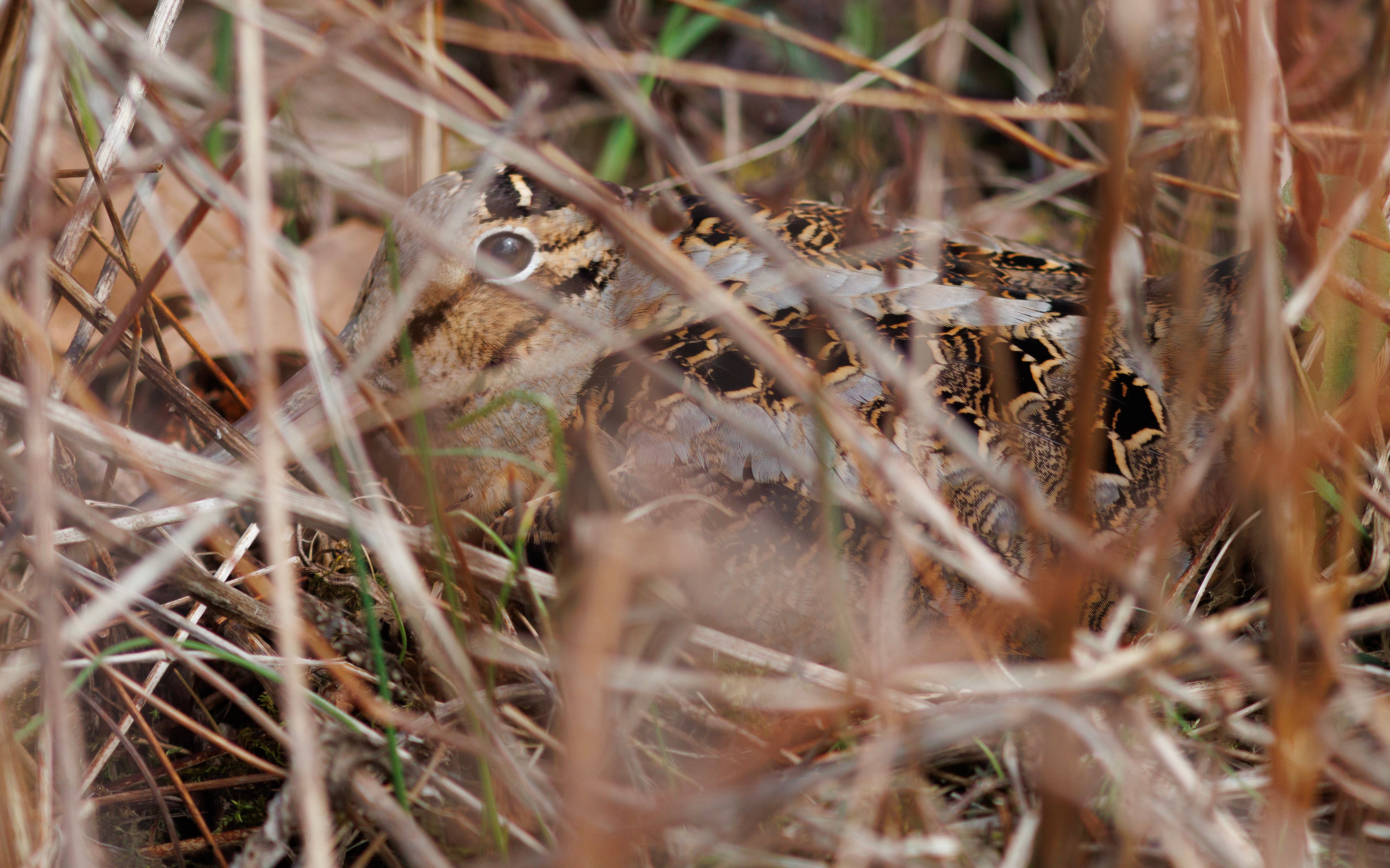
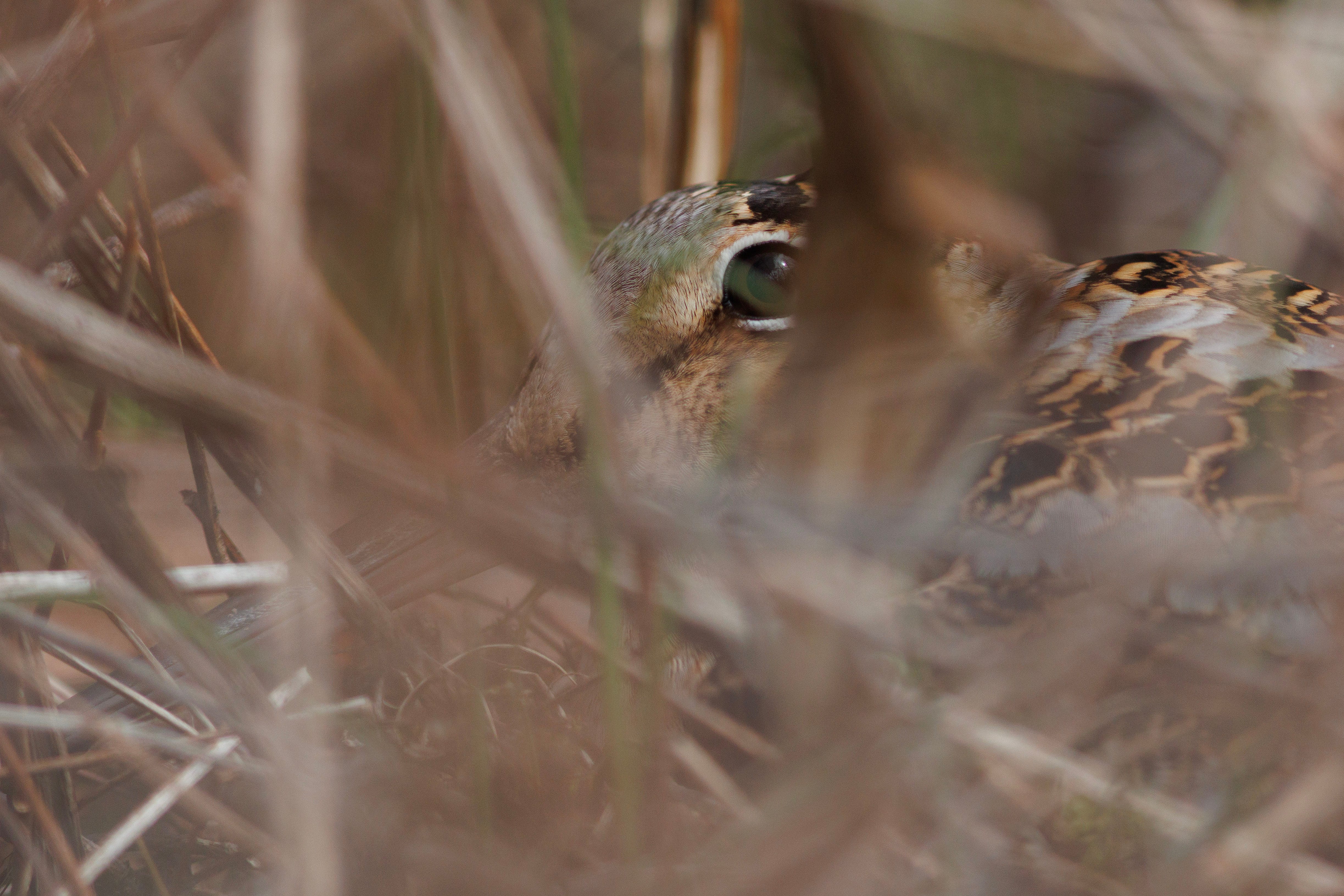
This last weekend I had the privilege of viewing a woodcock on its nest. Found by accident while walking through an overgrown field, a birding friend kindly let me know its location. Even with an exact description of where to look, the nest was incredibly hard to find. Obviously, I approached with extreme caution, as I had no wish to flush the female bird from the nest, or worse still, step on the eggs.
With my telephoto lens, I was able to capture frame filling shots while she sat on her nest, fully aware of my presence. I was completely awed by the determination and fearlessness this bird had, and its selfless commitment to raise the next generation of woodcocks.
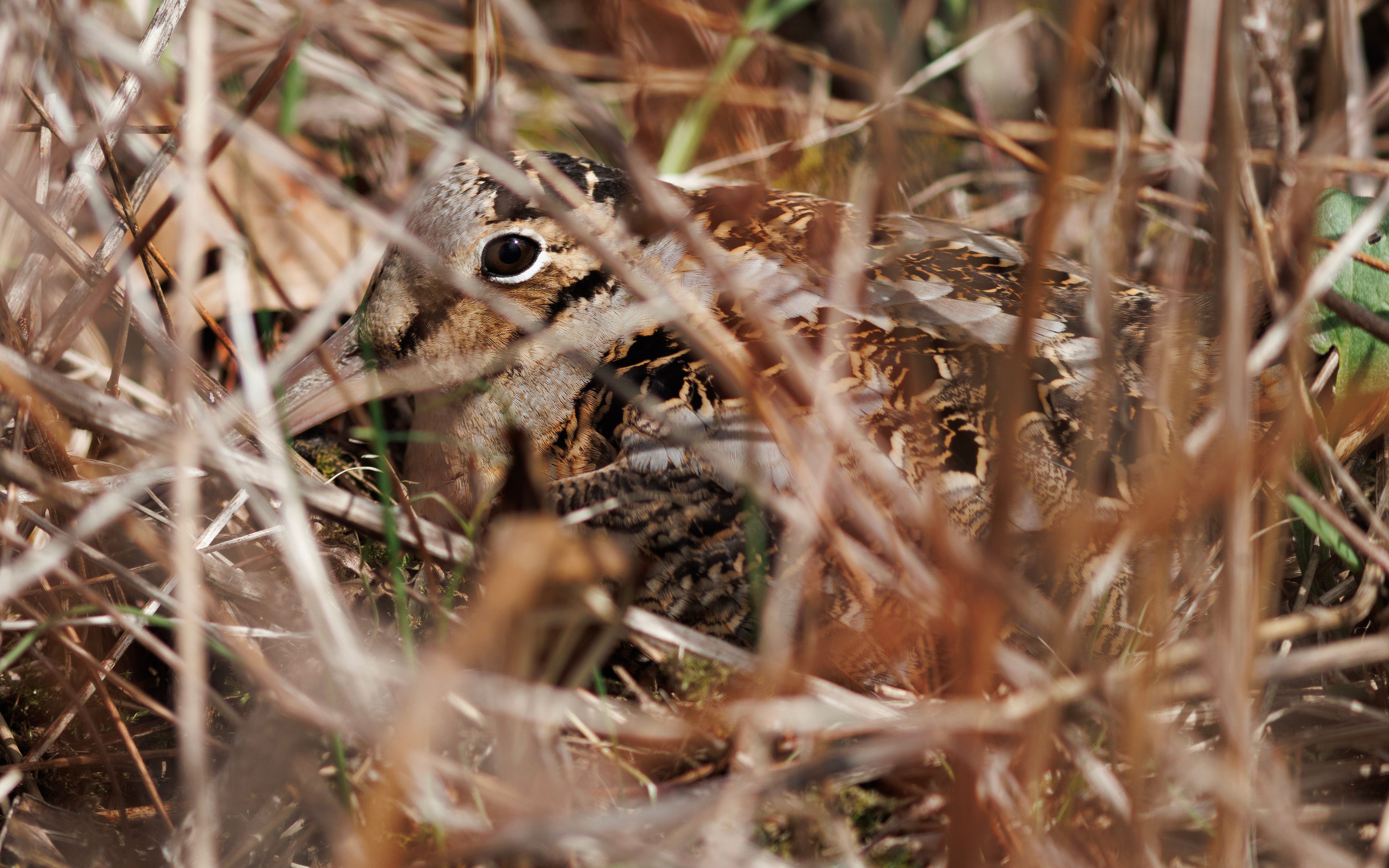
Below is a brief synopsis of the American Woodcock (which I have edited for brevity).
The American woodcock lives in the northern states and southern Canada during spring and summer, but spends the cold months in the southern states. They migrate at night flying at altitudes of about 50 feet, and stop to rest and feed during the day. In my corner of New York State, they arrive around the first week of March.
The American Woodcock is known by a number of colloquial names. Timberdoodle, Labrador twister, bogsucker and mudsnipe to name a few.
This chunky “shorebird” has a long flexible bill, which is used to probe the soil for worms. Their eyes are large, set well back and high on the sides of its head, letting the bird look to all sides while it forages for food. Earthworms are a large part of the bird’s diet, but they will also consume insects such as ants, flies, beetles, crickets, caterpillars and grasshoppers.
During the mating season, a male woodcock will seek to attract a female by producing a nasal, buzzing call note while on the ground. After doing this a number of times, he takes off into the air, ascending to 200 or 300 feet on twittering wings. Then with a chirping sound he spirals downward to repeat the performance over again. Beyond mating with the female, males have no further role in nest selection, incubation or rearing of the young.
A typical woodcock nest is a slight depression on the ground among dead leaves. The female lays one egg a day until she completes the normal clutch of four. The incubation process takes 19 to 22 days. American woodcock chicks are able to leave the nest within a few hours after hatching, and learn to “freeze” when threatened. Chicks forage on insects and earthworms, and by two weeks they can fly short distances. Within four weeks, they’re almost fully grown, and not only can they fly well, but they have almost have reached their adult size and weight. The family breaks up when the chicks are six to eight weeks old.
Great detail in that eye... nice work!
Peent 😉